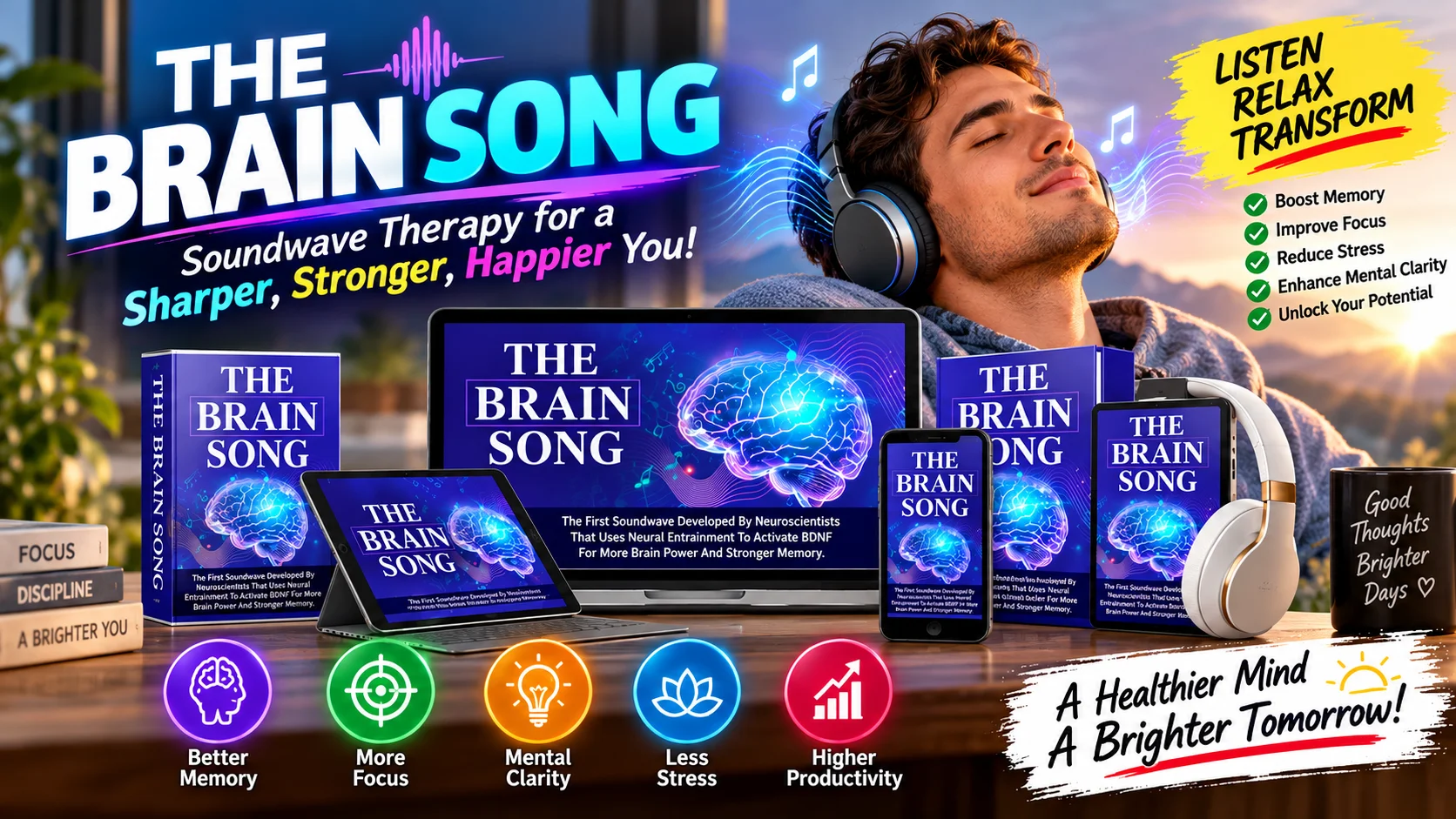
Does it really work” is the question that matters most, and it deserves a more careful answer than either the ad copy or the angriest forum comment gives you. The Brain Song is a 12-minute audio track sold at gobrainsong.com, marketed around gamma brainwaves and BDNF, with claims of supporting memory, focus, and mental clarity. Here’s a grounded look at what’s actually backed by evidence and what isn’t.
Separate the Claim Into Three Parts
To evaluate “does it work,” it helps to break the marketing pitch into three separate, testable pieces:
- Do gamma brainwaves relate to cognitive function in general? (Established science)
- Does audio-based entrainment reliably shift brain activity toward gamma frequency? (Mixed, developing research)
- Does this specific product’s audio track produce measurable cognitive benefits in real users? (No independently published evidence either way)
Marketing tends to blur these three into one confident claim. Treating them separately gives a much clearer picture.
Part 1: Gamma Waves and Cognition — Real Science
Gamma-frequency brain activity has a genuine research base. Studies using EEG have associated gamma activity with attention, working memory, and how the brain binds sensory information together. This is legitimate, peer-reviewed territory in neuroscience — not something The Brain Song invented.
Part 2: Audio Entrainment — Promising but Unsettled
The idea that structured sound (often discussed under terms like binaural beats or isochronic tones) can nudge brain activity toward a target frequency has been studied in academic settings for decades. Results across this broader research field are mixed: some studies report modest, short-term shifts in reported relaxation, mood, or attention; others find limited or inconsistent effects; individual variation is significant, and results often depend heavily on the exact method, frequency, and listening conditions used. In short, entrainment research doesn’t say “it doesn’t work” — but it also doesn’t offer a strong, consistent, one-size-fits-all “it works” verdict either.
Part 3: This Specific Product — The Missing Piece
This is where the biggest gap sits. No independently published, peer-reviewed clinical trial data specifically testing The Brain Song’s audio track has been identified. That means claims about this product’s effects on memory, focus, or BDNF levels are not currently supported by dedicated research — they’re extrapolated from the broader, general science covered in Parts 1 and 2, then applied to a specific commercial track without independent testing of that track itself.
The company’s own site includes the standard disclaimer that the FDA hasn’t evaluated its claims and that the product isn’t intended to diagnose, treat, cure, or prevent disease — language that, again, signals the company is not making a formal medical efficacy claim, regardless of how confident the ad language sounds.
What About User Reviews?
User reviews for products like this tend to split into two clusters: people who report feeling calmer, more focused, or subjectively sharper after regular listening, and people who report noticing no difference at all. This pattern is common for low-cost wellness products in general — it’s consistent with a mix of individual variability, expectation effects (sometimes called placebo response), and the simple fact that a quiet 12 minutes of focused listening can itself be a mildly relaxing, attention-resetting break in someone’s day, independent of any specific “gamma” mechanism.
It’s also worth repeating: a large share of the “reviews” you’ll find in search results are affiliate marketing content rather than independent, verified user experiences, so weigh star ratings and testimonials from search-heavy review sites with caution.
A Realistic Way to Judge It for Yourself
If you’re weighing whether to try it, a fair, low-risk approach looks like this:
- Set a baseline. Before starting, note how you currently feel regarding focus, memory recall, or mental fatigue over a normal week.
- Use it consistently for the period suggested by the product (often several weeks), since any real effect — if present — is unlikely to show up after one listen.
- Track specific outcomes, not vague impressions: did a specific task feel easier, did you forget fewer things, did your focus during work sessions change?
- Compare against known basics. Sleep quality, exercise, and reducing multitasking have far stronger, well-established research support for cognitive performance than any audio track. If you haven’t addressed those first, it’s hard to isolate what an audio track alone might be contributing.
- Use the refund window if you don’t notice a meaningful difference — confirm the current policy directly on the official checkout page before buying.
Bottom Line
Does The Brain Song “really work”? The honest answer: the neuroscience concepts it’s built on (gamma waves, BDNF) are real, but there’s no independently published, product-specific evidence confirming that this exact audio track delivers the cognitive benefits implied in its marketing. Some listeners may notice subjective benefits, similar to other calming or focus-oriented audio practices, but that’s different from a scientifically validated cognitive-enhancement effect. Treat it as an inexpensive, low-risk experiment rather than a proven solution, and keep well-established habits — sleep, exercise, and focused practice — as your primary tools for cognitive health.